Showing posts with label figures of speech. Show all posts

Wednesday, December 9, 2009

Ah, I Always Wanted a Term for That

In his New York Times column today, Paul Krugman uses the term "rent-seeking":

... the rapid growth in finance since 1980 has largely been a matter of rent-seeking, rather than true productivity.

It was a new one on me, so I looked it up.

Wikipedia says that, basically, rent-seeking means making money by exploiting economic factors instead of by producing something that creates real wealth.

Nice to know I'm not the only who's noticed how often this seems to happen.

Bookmark and Share


Thursday, September 24, 2009

More Words I'm Looking Up

beloved


I just came across in a document I'm editing: "... those noise-cancelling headphones beloved of frequent flyers."

I don't remember ever hearing "beloved of" before. I thought it was always "beloved by." I tried some wondering and Googling, but the hits I got didn't help: 1.5 million for "beloved by," but most of them followed by the name Toni Morrison. 1.1 million hits for "beloved of," including lots of constructions like, "His beloved of twenty years."

Still, at the top of the hit list was a link to a freedictionary.com page that included under "Examples from Classic Literature": There were Emperors beloved of literary men, Emperors beloved of the people ...


Still learning something new every day ...

Bookmark and Share


Monday, August 24, 2009

Words That Should Get a Divorce (One in an occasional series on words whose relationships have grown tired)

short and shrift

On some level, I like the expression short shrift. But I just can't condone such unhealthy codependency. Like trove and amok, shrift is devoted to a partner that doesn't return the loyalty. On any given day, short can be seen running around all over town with everything from sell to order cook to man's disease.

This case of codependency is so bad that shrift has pretty much lost its own identity. Dictionary.com and American Heritage via dictionary.com don't give shrift an entry at all. Dictionaries that do tend to treat it as archaic and define it as: "a remission of sins pronounced by a priest in the sacrament of reconciliation," which leaves the reader wondering how this resulted in the short shrift we know today, which roughly means "careless treatment" or "scant attention."

Freedictionary.com tries to shed a little light on the matter, but doesn't fully connect the dots. In other words, shrift gets short shrift.

I say shrift needs to go out on a date with long. A long date.

Bookmark and Share

Tuesday, December 23, 2008

Words That Should Get a Divorce (One in an occasional series on words whose relationships have grown tired)

highways and byways

This is a true Ike and Tina pairing. Poor byways has so much to offer. But it's completely subjugated in its relationship.

Of all the times I've heard someone say "highways and byways," I've never once believed the "byways" carried any meaning for the speaker. It's like the person wanted to speak only of highways, but he just couldn't resist the urge to make more sounds come out of his mouth.

A byway, according to American Heritage online, is a "secluded, private, or obscure road." Good word, huh? Handy and powerful for a mystery author writing about a drifter or a romance writer describing a backseat tryst.

WorldNet's definition, "a side road little traveled," suggests all kinds of wonderful metaphors.

But no, byways (in my experience) is used not to convey meaning to a listener but to provide empty gratification to the speaker or writer.

I can understand why these two words hooked up. Were it not for its brain-numbing overuse, the phrase "highways and byways" would be useful and visual -- a comprehensive snapshot of the roads that might be traveled. But too many people have used it as white noise for too long. It's time these two split up.

Bookmark and Share


Thursday, December 11, 2008

Wonderings and Pre-Google Googlings (Wherein I wonder about word issues Google can't help me with, then hack into a source that can)


I heard a new old expression the other day. The teacher of the economics class I'm watching via online video said that if you can identify an undervalued stock, you can get rich "in a cocaine heartbeat."

Now quick: Guess whether the instructor is in his late-30s, his early-50s, or his mid-60s.

That's right, late-thirtysomethings don't speak of cocaine. They're all "Heroin this and Kurt Cobain that." Mid-60s types, on the other hand, are all "Reefer this and Timothy Leary that."

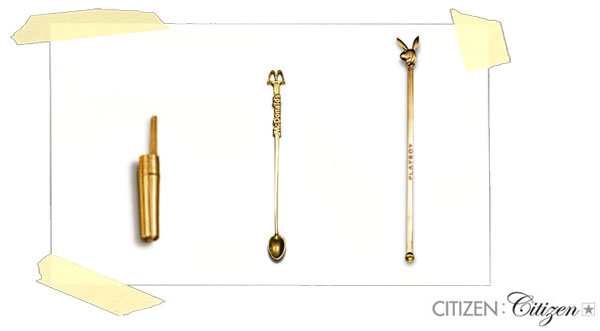
This level of cocaine consciousness can only come from someone who spent some formative social years in the 1980s -- a time when certain types wore on chains around their necks things called "coke spoons." A time when you'd occasionally run across a man who kept one pinky nail much longer than all his other fingernails. A time when twenty- and thirtysomethings were all "nose candy this and Crockett and Tubbs that."

So, wondering how this cultural emphasis was reflected in the language, I searched the Los Angeles Times archives for the word "cocaine" over two different time spans.

Jan. 1 to Dec. 31, 2007 = 399 hits
Jan. 1 to Dec. 31, 1986 = 1, 724 hits


I rest my superfreaking, white-loafer-wearing, party like it's 1999 case.


Bookmark and Share

Sunday, October 12, 2008

Wonderings and Googlings (Wherein I wonder about words, then I Google them)


vicious circle = 2,430,000 hits

vicious cycle = 2,111,000 hits

According to Garner's Modern American Usage, "Vicious circle is the phrase with the stronger precedent to support it. The OED records it from 1792 in the sense 'a situation in which an action and reaction intensify each other.' Vicious cycle isn't recorded in the OED."

Garner is more accepting than the Oxford English Dictionary. He says that both forms are okay. However, he notes, "vicious circle is about 40% more common than vicious cycle in modern print sources."

Apparently, Internet users aren't as partial toward "circle" as Garner's print sources.

Bookmark and Share


Tuesday, June 10, 2008

Pith of a Salesman

I got a great e-mail yesterday:
I work with a bunch of really smart sales and technical people that have an
uncanny knack for butchering the English language. About a year ago, my
boss and I started keeping a list that we call "The Board." I thought you
might enjoy a few of the gems we have collected via e-mail or while in
meetings:

For all intensive purposes
We need to broil it down
I wanted to go straight to the horse
I have built a close niche team
He is a loose gun
Throw icing on the cake
I am venomitly opposed to that idea
I don’t want to cry chicken
I’m going to put all my ducks on the table
We need to shuffle the dice
I don’t have a photogenic memory
I want to get ahead of the 8 Ball
I don’t want to throw him under the table
He has been under the sheets for a while
Their business is cylindrical
This deal is starting to get feet

(Thanks to C for this great stuff!)

Share

Bookmark and Share